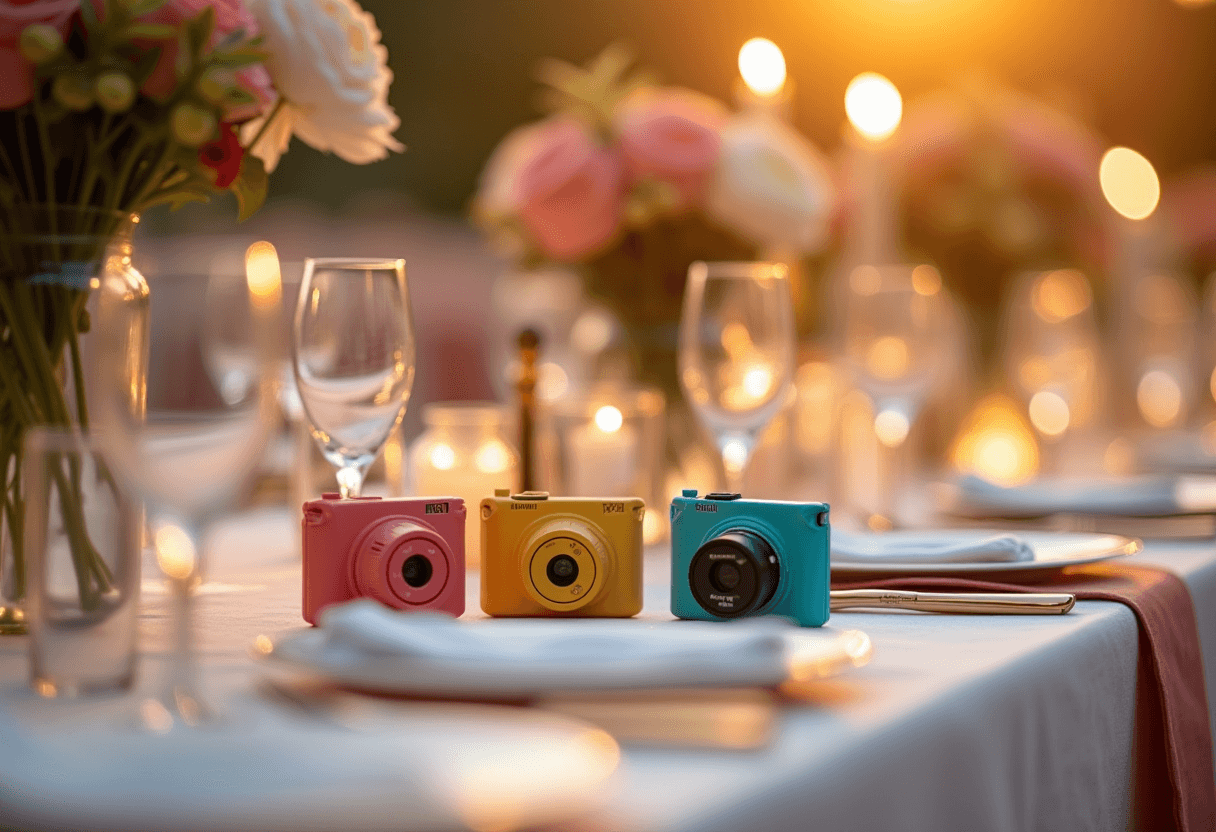
Scattering disposable cameras across the reception tables is a lovely idea, and it's been a wedding staple for a reason. But couples who've done it often come back with the same quiet complaint: the results weren't quite what they hoped. Before you buy a crate of single-use cameras, it's worth being honest about what each approach actually delivers.
What disposable cameras get right
Let's start with the case for them, because it's real:
- They're tactile and fun. People love picking one up. There's a novelty to a physical camera that a phone can't match.
- They pull a different kind of photo. Guests shoot more deliberately when they've only got 27 frames, and the flash-lit, slightly-grainy film look is genuinely charming.
- No screens. For a moment that's meant to be present, there's something nice about a camera that can't also check email.
If that look and feel is the whole point for you, disposables earn their place. Just go in clear-eyed about the rest.
Where they fall short
- You don't see anything for weeks. The cameras have to be collected, dropped at a lab, and developed. You're not looking at your wedding photos the next morning — you're waiting.
- The hit rate is low. A big chunk of every roll comes back blurry, dark, double-exposed, or a thumb over the lens. Nobody could check the shot, so nobody knew. Expect a good fraction of the frames to be unusable.
- It adds up. The cameras themselves, plus developing and scanning every roll, often costs more than people expect — and you pay it whether the photos are good or not.
- They can walk off. Cameras get pocketed, left in taxis, or simply lost before you collect them, and those photos are just gone.
- They're hard to share. Once developed, getting copies to guests means scanning and emailing — there's no easy "here are all the photos" link.
What a digital gallery does differently
A PixVenu gallery flips most of those limits:
- Every guest already has a camera. No crate to buy, no per-shot cost. People upload from the phones in their pockets by scanning a QR code on the table — no app to install.
- You see it as it happens. Photos appear in the gallery during the reception, not weeks later. You can watch the day fill up in real time.
- Nothing is lost or wasted. There's no roll to misplace and no cost to a bad frame. Guests can take fifty shots and keep the three good ones.
- It's instantly shareable. After the day, the same link is where everyone views the photos, and you can download the whole gallery in one go to keep.
The one thing it doesn't replicate is the film look — and that's the honest trade. A phone gallery gives you everything, fast, and shareable; it doesn't give you grain and flash by default.
Most couples do both
This isn't really an either/or. The setup we see work best: put a gallery at the centre — it's the reliable record, the one that's actually there the next morning and easy to share — and scatter a few disposables on the tables for the people who'll enjoy them and the handful of film shots you'll treasure.
That way the charm of film is a bonus, not your only plan. If the cameras come back half-blurry or one goes missing, you've still got the full day waiting in the gallery. And the gallery costs nothing per photo, so there's no downside to letting it catch everything the cameras don't.
If you want the safety net in place before the big day, setting up a gallery takes about two minutes.