By the time the cake is cut, your guests have taken hundreds of photos. The hard part isn't capturing the night — modern phone cameras handle that — it's collecting all those photos into one place you can keep.
We've spent a lot of time watching couples and hosts try to solve this. The patterns that fail are surprisingly consistent.
What doesn't work
Shared Dropbox or Google Drive folders. Requires guests to have the right account, navigate to the right URL, and decide which photos are "good enough" to upload. Most don't.
Wedding hashtags on Instagram. Public, lossy (Instagram recompresses everything), and you only get the photos guests felt confident enough to post — the candid blur of your aunt mid-toast doesn't make it.
"Text me your photos later." Some will. Most won't, because by the time you ask, they've already moved on to whatever happened the next weekend.
Photo-booth-style apps that need an install. Even a free app install is friction. Older relatives won't bother. Out-of-town guests on roaming data definitely won't.
What QR sharing does differently
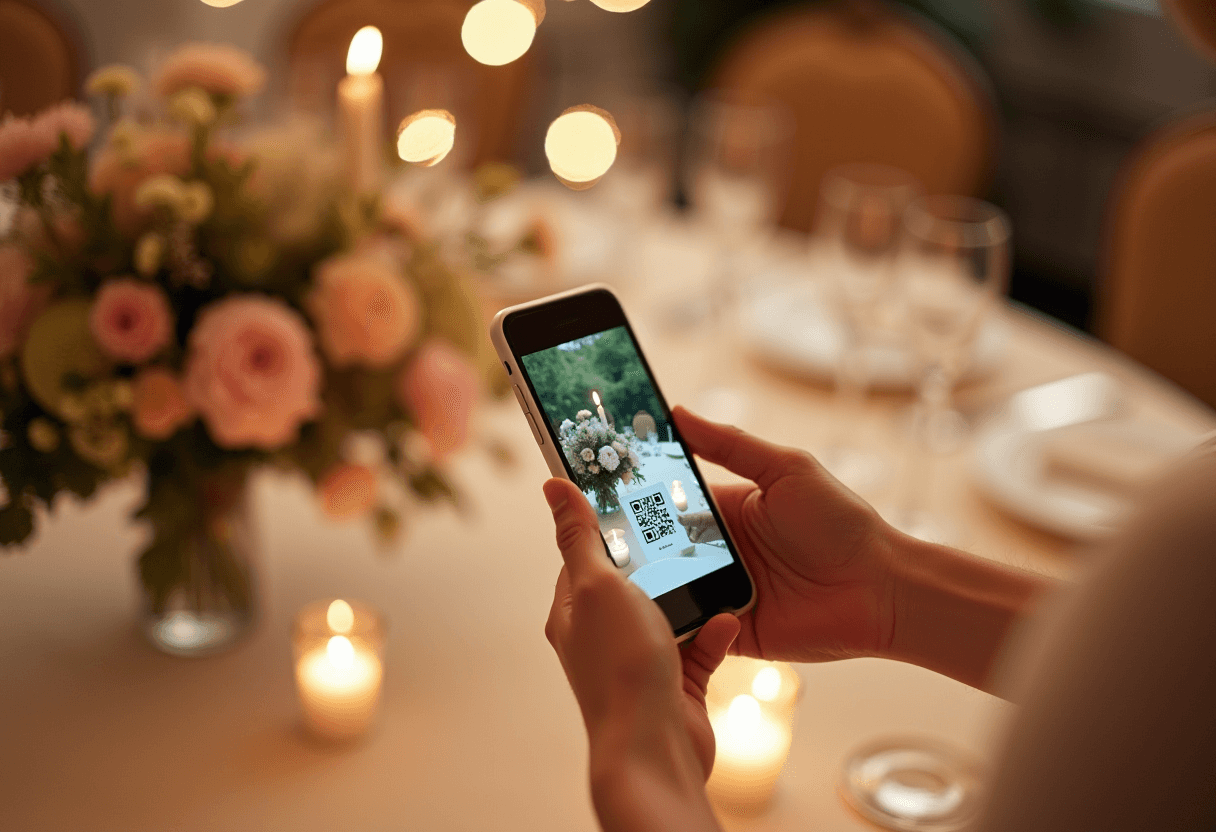
The phone is already in the guest's hand. The camera app is what they used to take the photo. Pointing it at a small printed QR code and tapping the banner that appears is the lowest-friction interaction a phone offers — easier than scrolling Twitter, easier than texting.
There's no app to install. There's no account to create. There's no decision to make about which photos are "good enough." The page opens, the upload button is there, and the gallery fills.
What you get back is everything — the candid moments your photographer missed, the video of your aunt's unprompted toast, the behind-the-scenes blur from the dance floor. At full resolution, yours to keep forever, whether or not the gallery is still hosted.
That's the whole pitch.